


This article explores in detail the concept of the morpheme, the smallest unit of meaning in linguistics, while clarifying its distinction from the word, a more complex and polysemous unit. Through concrete examples and rigorous analysis, this article offers an enriching exploration of the internal structure of words.
The concept of the morpheme is central to morphology, the branch of linguistics that studies the internal structure of words. A morpheme is defined as the smallest linguistic unit possessing both form and meaning (Martinet, 1926). Unlike phonemes, which are units of sound devoid of meaning, the morpheme combines a signifier (sound or graphic form) and a signified (concept or grammatical function). It therefore constitutes the basic element for breaking down words into meaningful units.
The distinction between a word and a morpheme is essential for understanding the structure of languages. A word is often perceived as an isolated unit in discourse, but it can contain several morphemes. Take the French word *chantons* (let’s sing) as an example. This word is composed of two morphemes: *chant-* (the lexical root, carrying the main meaning, here the action of singing) and *-ons* (a grammatical morpheme expressing the first-person plural in the present indicative). Thus, a word can be monomorphemic, like *table* (table), or polymorphemic, like *relecture* (rereading), which combines the prefix *re-*, the root *lect-*, and the suffix *-ure*.
Morphemes are divided into several categories according to their function. Lexical morphemes, or roots, carry an independent lexical meaning. For example, in words like *pomme* (apple), *chant* (song), or *maison* (house), the root designates a concrete or abstract concept. Grammatical morphemes, on the other hand, play a structural or relational role in the sentence. These are affixes (prefixes and suffixes) or function words such as prepositions and conjunctions. For example, in *ils chantent* (they sing), the suffix *-ent* indicates the third-person plural and cannot exist independently.

A further distinction is made between free and bound morphemes. Free morphemes, such as * livre* (book) or * et* (and ), can exist on their own as words. Conversely, bound morphemes, such as *-eur* (-er) or *-s* ( -s) , can only appear in combination with other morphemes. This distinction reflects the hierarchical organization of linguistic units and their interdependence.
The word, on the other hand, is a larger and more complex unit. Its definition remains problematic due to the multiplicity of its forms and functions. According to Patri (2007), a word can be defined as a phonemic sequence associated with a concept or as a set of forms sharing a common referent. For example, *dansons* and *dansez* are two different word-forms belonging to the same lexeme *danser*. This approach highlights the duality between the phonological dimension of the word (its sound or graphic realization) and its syntactic and semantic dimensions.
The distinction between word and morpheme is particularly useful in the analysis of inflectional and agglutinative languages. In French, an inflectional language, a word like *repartirons* contains several morphemes, each expressing precise information: *re-* (repetition of the action), *part-* (lexical root), *-ir-* (indicator of the verb’s infinitive), *-ons* (first-person plural). In contrast, in an agglutinative language like Turkish, each morpheme is clearly identifiable and retains its stable form, as in the word *evlerinizden * (“of your houses”), which is composed of *ev * (house), * -ler* (plural), * -iniz* (your), and * -den * (of).
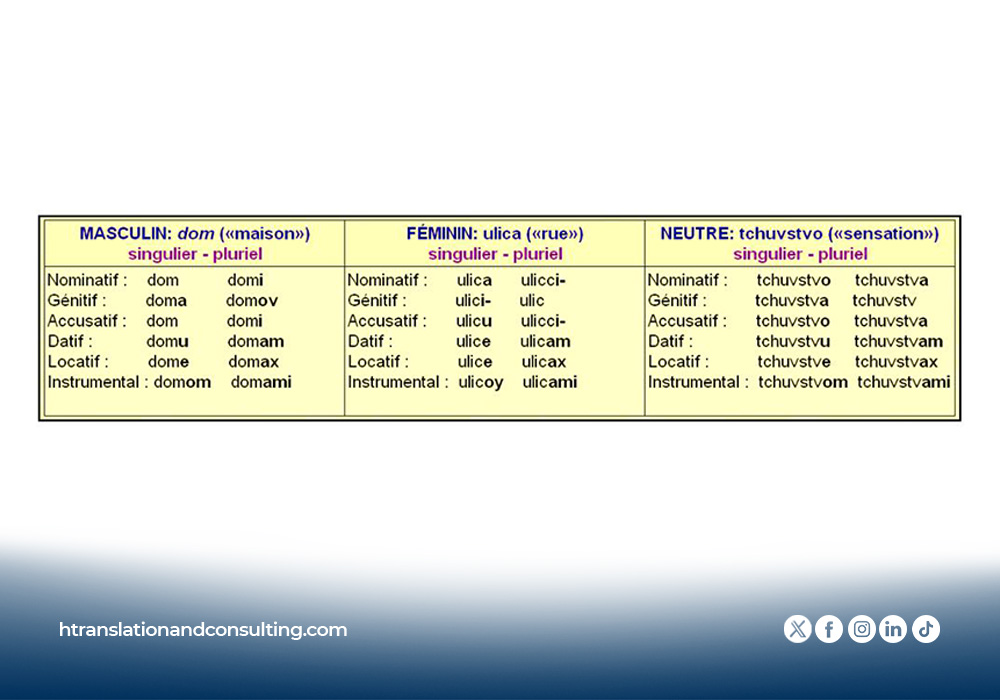
To identify and delimit morphemes within a word, linguists use the commutation test, which involves replacing one element with another to verify its role and meaning. For example, in the word relecture (reading/re-), replacing the prefix re- with pré- gives prélude (prelude), a word that is different both phonetically and semantically. This method allows us to test the relevance of morphological units and to distinguish allomorphs, contextual variants of the same morpheme, such as in- and im- in inactif (inactive) and impossible (impossible).
In conclusion, the morpheme, as the minimal unit of meaning, is a cornerstone of linguistic analysis. Its distinction from the word, which is larger and often polymorphemic, reflects the complexity of natural languages and their morphological richness. This nuanced understanding of the internal structures of words paves the way for a better grasp of the mechanisms that govern the formation of lexical and grammatical units.
Jocelyn Godson HÉRARD, Copywriter H-Translation