


This article explores the fundamental difference between sound and phoneme, two essential concepts in the study of language. Drawing on the contributions of linguists such as Troubetzkoy and Baudouin de Courtenay, it offers a detailed understanding of the foundations of phonetics and phonology.
Contemporary linguistics precisely distinguishes between sound and phoneme, two fundamental concepts with distinct functions. Understanding this difference allows us to grasp the foundations of phonological analysis, essential for describing the workings of natural languages.
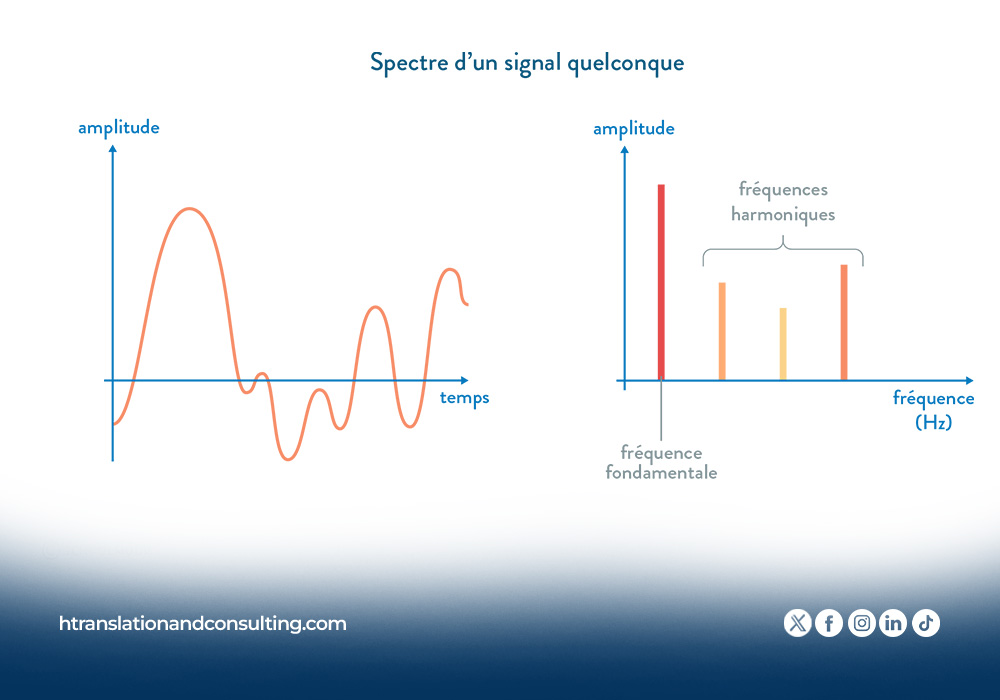
Sound, the unit of phonetics, is a physical and measurable phenomenon. It results from the vibration of the vocal cords, the articulation of the speech organs, and acoustic properties. Each sound, or phoneme, is a specific realization that can vary according to the articulatory context without affecting the meaning of words (Duchet, 1981). For example, the sound [p] produced in “pomme” (apple) is a simple air vibration, defined by its articulatory and acoustic characteristics. In contrast, the phoneme is an abstract and distinctive unit of language, responsible for creating semantic contrasts.

Troubetzkoy (1986) defines the phoneme as the smallest distinctive unit of language, which cannot be broken down into simpler segments. In the minimal pair “port” [pɔʁ] and “bord” [bɔʁ], the opposition between /p/ and /b/ demonstrates the distinctive function of phonemes. Thus, the phoneme belongs to phonology, which studies the functional role of sounds in a given linguistic system, while the sound is the object of study of phonetics, which analyzes its production and perception.
Baudouin de Courtenay was one of the first to emphasize the psychological nature of the phoneme. According to him, the phoneme is not simply a sound, but a mental representation stabilized in the consciousness of speakers. Scerba extends this idea by asserting that the phoneme constitutes the minimal element of general acoustic representations associated with units of meaning.
In the structuralist tradition, the distinction between phoneme and sound is central. Trubetzkoy contrasts their characteristics: a sound is independent of neighboring elements, while a phoneme is always defined by its relationships with other phonemes. This interdependence is evident in coarticulation relationships, where a phoneme can be influenced by its immediate phonetic environment.
The minimal pair method allows us to identify the phonemes of a language. It involves comparing two words that differ by only one sound, such as “rat” [ʁɑ] and “las” [las]. This test reveals that the sounds [ʁ] and [l] belong to distinct phonemes, as their substitution results in a change of meaning. Phonetics, on the other hand, studies these isolated sounds, their duration, intensity, and frequency, without considering their linguistic role.
In generative phonology, the notion of a segment, composed of distinctive features, sometimes replaces that of a phoneme (Chomsky and Halle, 1968). A segment is defined by binary oppositions such as [voiced] or [nasal], forming a system that describes all the relevant contrasts in a language. This approach refines the understanding of phonemes by highlighting common and distinctive features.
Finally, the phoneme is distinguished by its functional nature. While sound is a physical manifestation observable in all languages, the phoneme varies according to linguistic systems. For example, the vowel distinctions of French, which include rounded front vowels like [y], do not exist in Haitian Creole, where the phonological system is structured differently (Govain, 2023). The relationship between sound and phoneme is therefore both complementary and contrasting, defining two essential levels for the analysis of human language.
In summary, sound is a measurable entity in the field of phonetics, while the phoneme is an abstraction specific to each language, defined by its distinctive oppositions and its role in linguistic communication. This fundamental distinction allows us to grasp the richness and complexity of sound systems in their diversity and function.
Jocelyn Godson HÉRARD, Copywriter H-Translation