


This article explores the complex relationship between language and thought, drawing on the theories of leading linguists and neuroscientists to understand whether one can exist independently of the other. Based on empirical observations, it examines how language, while essential for structuring and conveying ideas, is not necessarily the origin of thought. This analysis also considers neurological data on aphasic individuals to demonstrate how thought can persist in the absence of formal language.
The relationship between language and thought has long been a subject of interest in the humanities and social sciences, as well as in cognitive science. For centuries, philosophers, linguists, psychologists, and neuroscientists have debated the independence or interdependence of these two phenomena. Language, defined as a specifically human faculty of communication through vocal and gestural signs, is often perceived as the primary means of transmitting ideas. However, thought, which encompasses all cognitive processes, could, according to some, exist independently of language, as suggested by studies of non-verbal individuals or those with language disorders. This article explores the multifaceted nature of this relationship, drawing on theories and empirical observations to examine the extent to which language influences, structures, or accompanies thought.
Classical and contemporary theories have often offered opposing perspectives on the relationship between language and thought. The founder of modern linguistics, Ferdinand de Saussure, distinguishes between thought and language, although the two are deeply intertwined in their role of structuring human experience. Language acts as a symbolic code that allows for the formalization of thought, without being its origin. Noam Chomsky, famous for his theories on universal grammar, reinforces this idea by asserting that language is a “mental organ,” a universal and innate characteristic of the human species, which expresses ideas without necessarily creating them. According to Chomsky, language and thought exist in parallel, each language enabling the transmission of ideas, but without fundamentally determining them.
Proponents of the Sapir-Whorf theory take an alternative view, arguing that language influences how speakers perceive and conceptualize the world. According to this hypothesis, each language shapes a unique worldview by organizing experiences and determining certain aspects of perceived reality. Thus, speakers of different languages might interpret and understand the world in distinct ways because their language structures their thinking and feeling. However, this theory, while stimulating, faces criticism because it may underestimate the universal human capacity for abstraction and perception, independent of one’s native language.
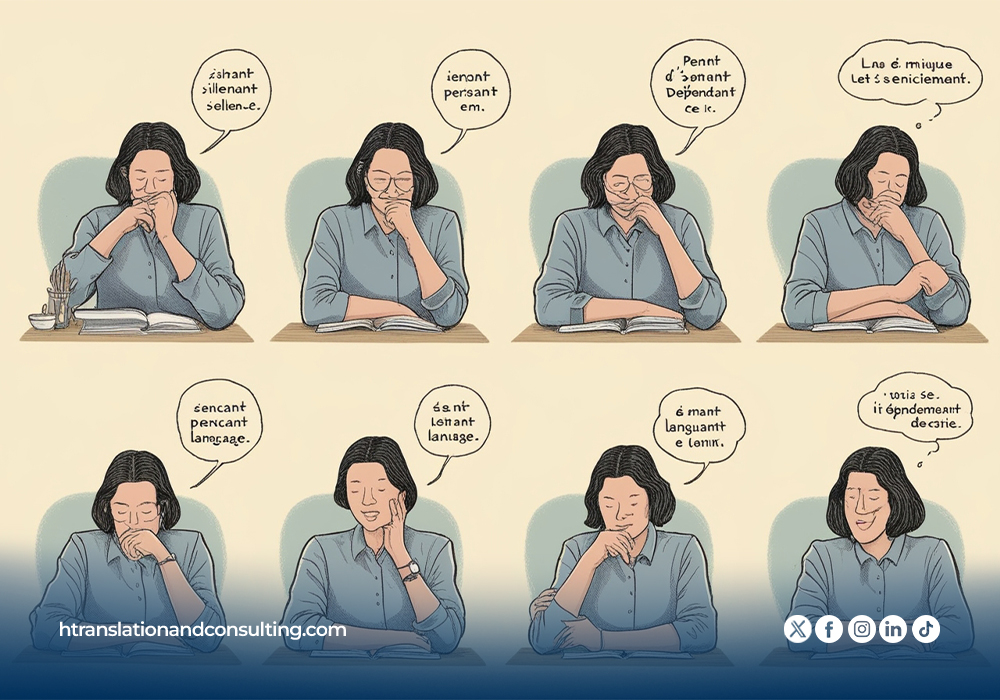
The study of aphasics, individuals who have partially or totally lost the use of language following brain damage, provides crucial empirical data on this question. Observations show that, despite severe language impairments, many aphasics retain complex cognitive skills, such as logic, planning, and visual memory. This data suggests that thought can persist in the absence of formal language. Furthermore, neuroscience research on the lateralization of brain functions has demonstrated that, although the left hemisphere is often responsible for language processes, the right hemisphere actively participates in cognitive tasks that do not depend on verbal language. These findings indicate that language and thought, while interdependent in certain situations, can function autonomously.
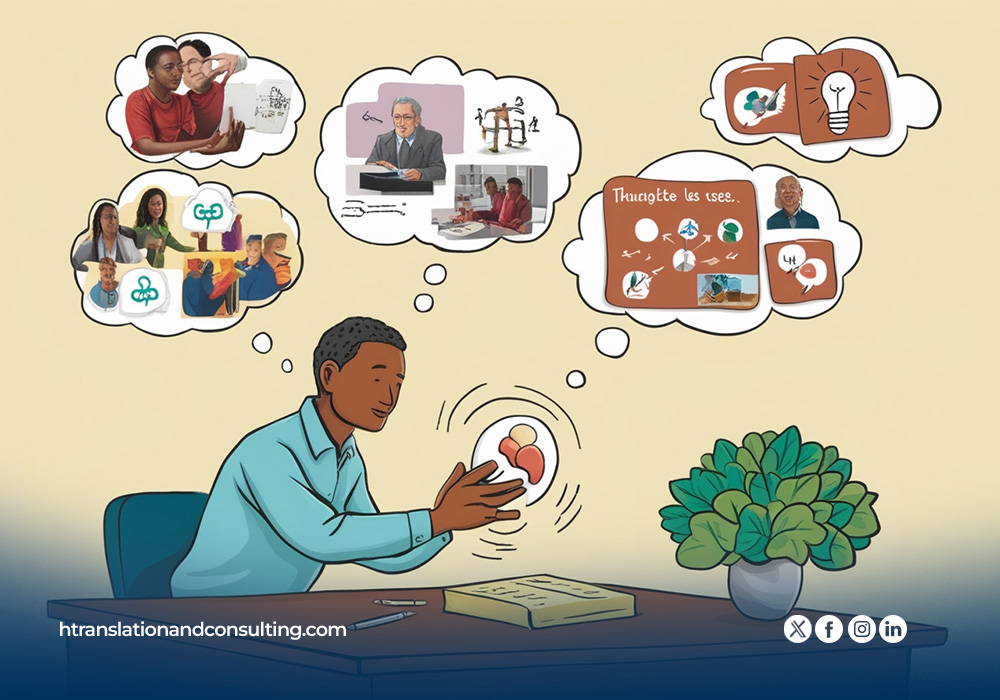
From this perspective, neuroscience offers new insights that support the idea of thought existing prior to or parallel to language. The Nobel Prize-winning work of Roger Sperry demonstrates that the right hemisphere is capable of reasoning and making decisions in the absence of language. These discoveries challenge the notion that language is essential to thought and confirm that sophisticated cognitive mechanisms can exist independently of linguistic structures. These abilities reveal the complexity of human thought, which relies not only on language but also on broader perceptual and cognitive systems.
The study of human memory capacity also sheds light on the distinctions between thought and language. Unlike artificial or computer memory, which relies on strict rules of information processing, human memory is capable of distinguishing and contextualizing multiple and sometimes ambiguous experiences. This capacity for discrimination seems to indicate that human thought, enriched by language, is nevertheless independent of language in its ability to recognize and organize experiences.
In conclusion, the various theories and observations presented reveal a complex relationship between language and thought, oscillating between interdependence and autonomy. Language proves to be a powerful tool for socialization and structuring thought, while also allowing for forms of reasoning and cognition independent of verbal expression. Research on this topic opens fascinating perspectives for understanding how humans perceive, interpret, and communicate their experiences, in a delicate balance between linguistic expression and cognitive abstraction.
Jocelyn Godson HÉRARD, Copywriter H-Translation