


This article revisits the concept of creolization in the context of Saint-Domingue through an analysis of the linguistic, racial, and cultural dynamics that shaped Haitian identity. Inspired by Madison Smartt Bell’s original article, “Kreyol pale, kreyol konprann” (Multitudes, 2005), it highlights the crucial role of the Creole language, social mixing, and revolutionary figures such as Toussaint Louverture and Jean-Jacques Dessalines in the construction of a free nation. By exploring the unifying power of Creole and the political implications of creolization, this reflection offers an enriching perspective on the origins and significance of Haiti as the first independent Black republic.
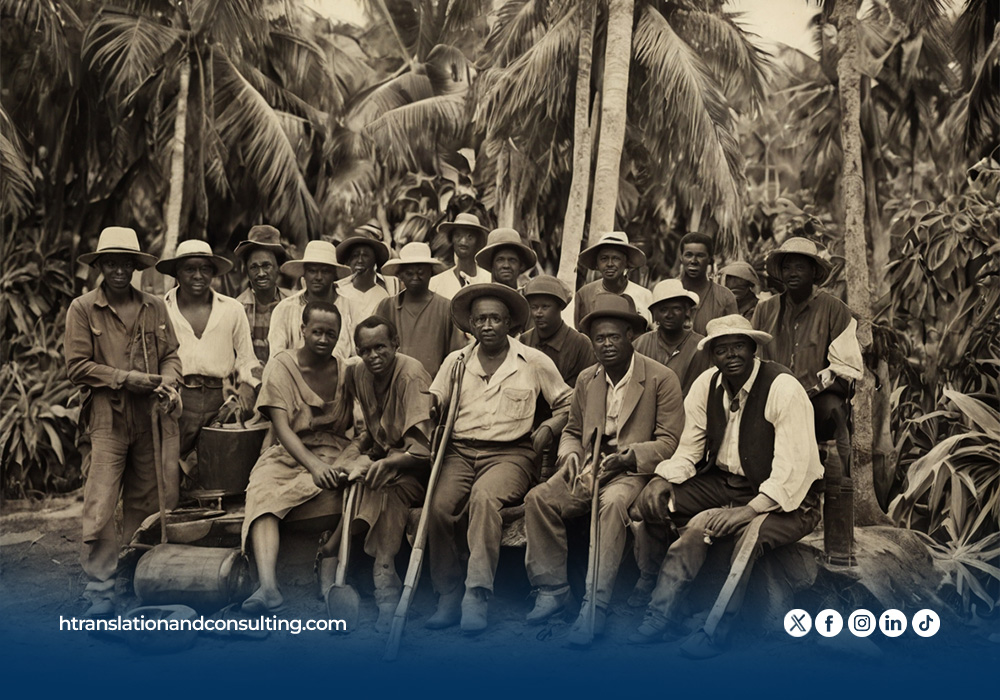
The term “Creole” originates from an earlier usage referring to a person born in a colony, regardless of their skin color or social status. Moreau de Saint-Méry (1797), in his meticulous descriptions of colonial society, illustrates the diversity of Creoles: he distinguishes between white Creoles, often characterized by tyrannical behavior, and black Creoles, who aspire to differentiate themselves from the recently arrived slaves from Africa (Bossales) due to their baptism and a perceived form of cultural superiority. This dichotomy highlights the internal divisions among Afro-descendant populations, exacerbated by complex distinctions of mixed ancestry. The racial permutation charts developed by Moreau testify to a colonial obsession with classifying blood mixtures, reflecting social anxieties surrounding racial purity and identity.
Alongside social representations, creolization also affected linguistic practices. The Creole of Saint-Domingue, described by Moreau as a “corrupted jargon,” nevertheless became a rich tool for cultural expression. Indeed, Bell emphasizes the role of Creole in communication between slaves and masters, as well as in organizing revolts. The language, the product of forced contact between speakers of various African languages and French, evolved into a unique grammatical system. Its flexibility and its capacity to integrate elements from other languages made it a living and dynamic language, comparable, according to the author, to Shakespearean English in terms of expressive energy.
The political significance of Creole was evident at the Bwa Kayiman rally, the inaugural event of the Haitian Revolution, where the language served to unite insurgents from diverse cultural backgrounds. Boukman Dutty, the movement’s leader, used Creole in a speech blending spirituality and libertarian demands, illustrating how language transcends divisions to become a unifying force. Creole was thus perceived not only as a language of communication, but also as a symbol of emancipation and collective resistance.
Bell’s narrative culminates in an analysis of the power transition between Toussaint Louverture and Jean-Jacques Dessalines. While Toussaint, a cultured freedman, embodies a moderate vision of social creolization, where each racial group retains its identity while participating in an integrated society, Dessalines adopts a radical approach. By merging all racial distinctions under the single identity of “Negro,” he redefines national belonging and strikes a decisive blow against institutional racism. This linguistic and political transformation symbolizes an ultimate form of creolization, where language becomes a tool for social equalization.
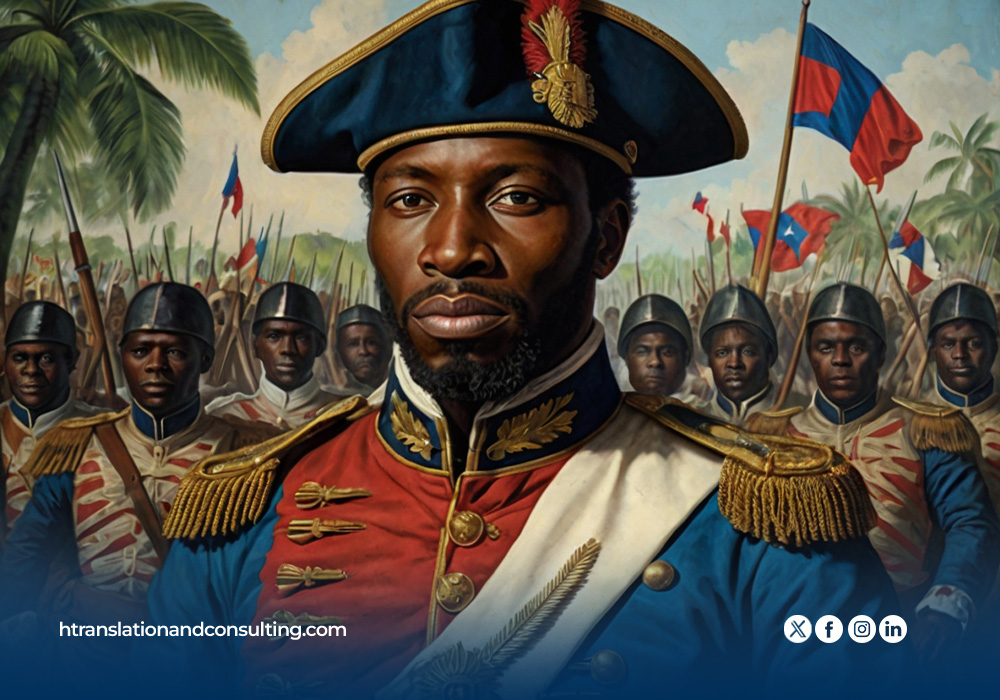
In conclusion, Bell’s article brilliantly illustrates how creolization, as a linguistic, cultural, and political process, has shaped Haitian identity. He demonstrates that the Creole language, far from being a mere product of colonial contact, is a vehicle for profound social transformation. This reflection resonates with contemporary work on language dynamics in postcolonial contexts, which affirms that Creole, like the identity it embodies, remains a space of negotiation and constant reinvention (DeGraff, 2005). Bell (2005) thus invites us to rethink creolization not only as a historical reality, but as a living process, a testament to a humanity in perpetual motion.
Jocelyn Godson HÉRARD, Copywriter H-Translation