


In this article, we explore the deep roots of the stigmatization of Haitian Creole and the complexities of its development in contemporary society. From the colonial legacy to current debates on language policy, we analyze the sociolinguistic and educational issues that shape the future of this language.
Robert Berrouet-Oriol’s article, “Stigmatization of Creole, Black Code, and Populism,” examines the complex issue of the stigmatization of Haitian Creole, exploring its historical origins, contemporary manifestations, and implications for language planning in Haiti. The author offers an in-depth analysis of this phenomenon, situating it within the broader context of linguistic ideologies and socio-cultural dynamics that shape attitudes toward languages in Haiti.
The stigmatization of Haitian Creole is rooted in the country’s colonial history, particularly in the legal framework imposed by the Code Noir of 1685. This legal document, which governed the slave system in the French colonies, established a strict social and linguistic hierarchy, placing French at the top and relegating the languages of the enslaved, including the emerging Creole, to the bottom. This linguistic stratification became deeply ingrained in the Haitian collective consciousness, persisting well beyond the country’s independence in 1804.
The author offers a detailed analysis of the vocabulary associated with the stigmatization of Creole, highlighting the richness and complexity of the terms and expressions used to devalue this language. This stigmatizing lexicon includes simple terms like “patwa” (patois) as well as more elaborate phrases such as “kreyòl rèk” (hard Creole) or “lang moun mòn” (language of the mountain people). These expressions convey negative connotations, associating Creole with rural life, ignorance, or a lower social status. In parallel, French is often presented as a “superior” or “cultured” language, thus reinforcing the linguistic dichotomy inherited from the colonial era.
The study also highlights the existence of a “Haitian linguistic ideology” that structures representations and discourses about languages in Haiti. This ideology manifests itself through a binary opposition between French and Creole, each language being imbued with distinct symbolic and social values. The author highlights the paradoxes and tensions inherent in this ideology, particularly how it can simultaneously fuel the stigmatization of Creole and hinder efforts aimed at its development and promotion.
A particularly interesting aspect of the analysis concerns the parallels drawn between the stigmatization of Creole and certain activist discourses advocating its promotion. The author suggests that there is an “ideological and functional kinship” between these two seemingly opposing positions. Indeed, some ardent defenders of Creole, described as “Creole Ayatollahs” in the article, sometimes adopt dogmatic and exclusionary stances that, paradoxically, can reinforce the marginalization of the language they seek to promote. This phenomenon illustrates the complexity of linguistic issues in Haiti and the need to adopt nuanced and inclusive approaches to the country’s language planning.
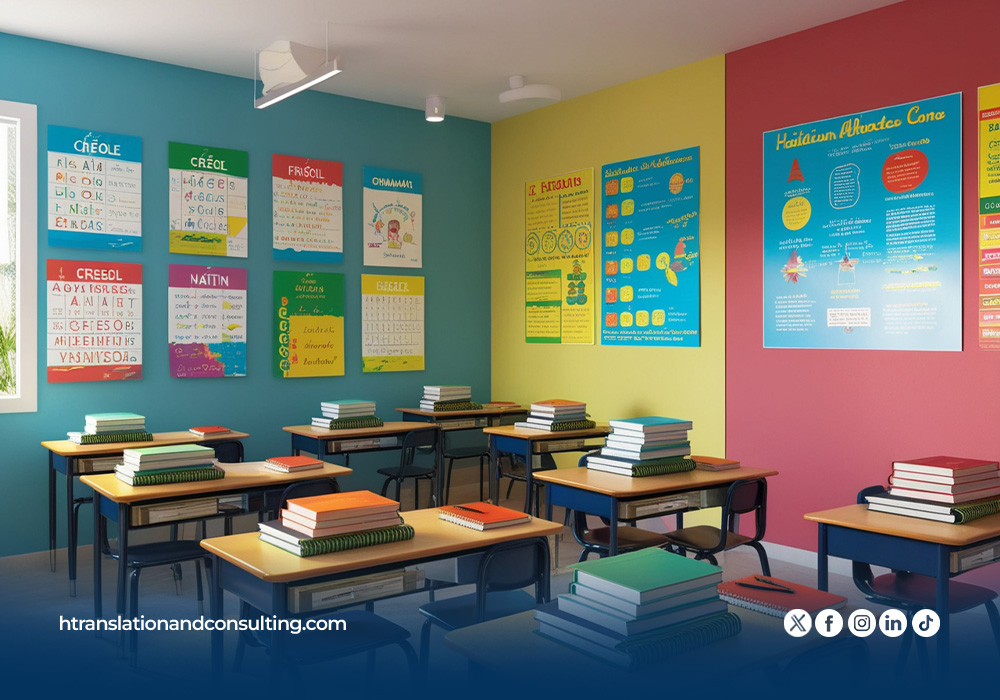
The article also addresses the issue of integrating Creole into the Haitian education system, highlighting the challenges and obstacles to overcome. The author advocates for a scientific and ethical approach to teaching Creole, based on high-quality lexicography and respecting the linguistic rights of all Haitian speakers. This perspective aligns with the broader framework of linguistic rights, as defined by the 1996 Universal Declaration of Linguistic Rights, and underscores the importance of integrating these rights into the process of building the rule of law in Haiti.
In conclusion, the study offers an in-depth reflection on the need to move beyond linguistic and ideological divides to promote genuine Creole-French bilingualism in Haiti. The author calls for an “epistemological shift” in the approach to language planning, emphasizing the complementarity of the country’s two official languages rather than their opposition. This vision implies not only changes in language and educational policies, but also a transformation of attitudes and social perceptions related to languages.
This analysis offers valuable insight into the complex dynamics underlying linguistic attitudes in Haiti. It invites in-depth reflection on how to promote harmonious coexistence between Creole and French, while valuing the country’s cultural and linguistic richness. In doing so, it makes a significant contribution to the debate on language planning in Haiti and, more broadly, to understanding the challenges of multilingualism in postcolonial societies.
Jocelyn Godson HÉRARD, Copywriter H-Translation