


Does language play a central role in cognitive development, or is it merely a secondary tool, a “recording chamber” for the progress of thought? Drawing on the work of Jean Piaget, this article explores the relationship between language and cognition, while also highlighting the limitations of this perspective. This reflection re-evaluates the importance of language as a complex entity that stimulates the development of intellectual abilities.
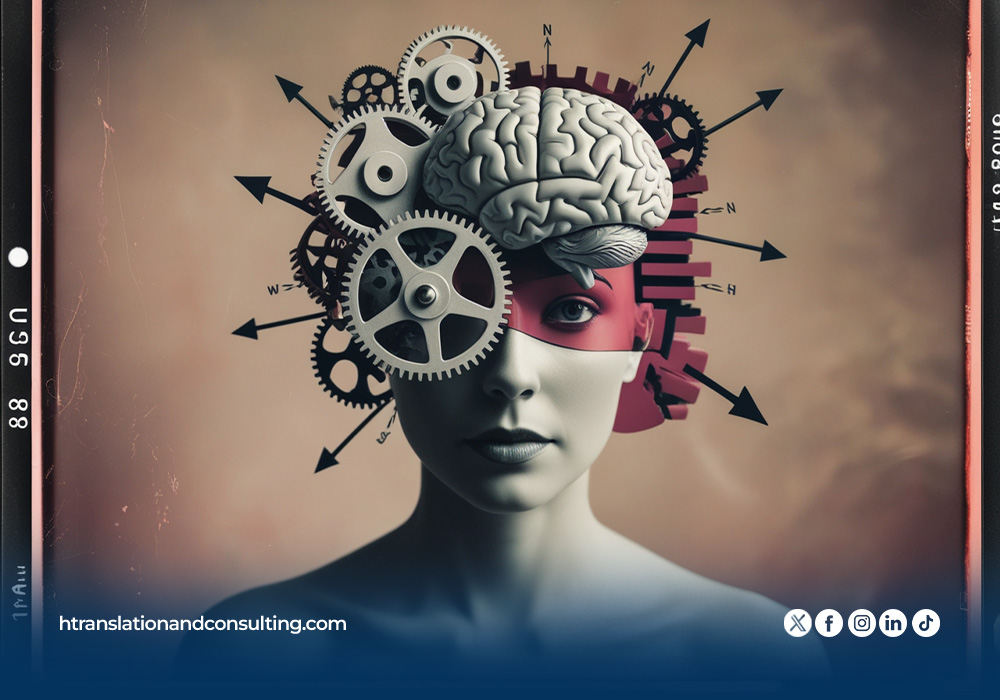
The role of language in cognitive development has long been a subject of debate. The work of Jean Piaget, a major figure in constructivism, offers a perspective in which language occupies a functional but not fundamental place in the mechanisms of development. Indeed, for Piaget, cognitive development rests primarily on operational processes and the actions of the individual, while language acts mainly as a tool for representing the cognitive structures being developed. This conception, while insightful, deserves to be revisited to examine the potential role of language as an object of exploration and reconstruction by the individual.
In Piaget’s view, language is not an autonomous driver of development, but rather follows the evolution of cognitive processing systems. Symbols and signs, while useful for representing complex operations, do not themselves create those operations. Piaget argues that deep cognitive structures, arising from action and sensorimotor mechanisms, precede the emergence of language, both individually and from an evolutionary perspective. Thus, the first concrete operations, such as classification or matching, are initially actions performed physically before being internalized and expressed verbally.
This hierarchy between cognition and language is also evident in formal operations. While language allows for the structuring of simultaneous systems independent of concrete objects, it cannot, according to Piaget, fully express the complex combinatorial and transformational systems that characterize formal thought. Language, limited by its own structures, is incapable of formulating certain advanced abstractions without recourse to additional tools such as mathematical notation. This observation illustrates Piaget’s thesis that language accompanies, but does not generate, cognitive progress.
Piaget goes further, asserting that language plays a secondary role in the mechanisms of transition from one developmental stage to another. It acts as a “recording chamber,” a means of representing and organizing, at the symbolic level, the progress made through reflective abstraction. This conception reduces language to a descriptive function, depriving it of any causal power in the emergence of new cognitive structures. In other words, developmental advances are attributed to the subject’s actions and autonomous cognitive processes, and not to an evolution inherent in language itself.
However, this position, while influential, can be broadened to include the active role of language as an object of knowledge. From birth, children are immersed in a linguistic environment that they must decode, explore, and reconstruct. This immersion is not limited to the passive learning of a language but involves comprehension strategies and production mechanisms that evolve over time. Beyond its communicative role, language becomes an object of investigation and thematization, thus indirectly but significantly stimulating cognitive development.

The language learning process illustrates this dynamic. During their early years, children discover and reconstruct the structures of their native language, from grammatical rules to semantic and pragmatic nuances. This exploration requires the development of sophisticated cognitive systems to grasp and process an object as complex as language. From an interactionist perspective, where objects are external to the subject but require cognitive operations to be understood, language presents itself as a unique stimulus. Through its richness and diversity, it pushes children to develop advanced cognitive abilities, such as abstraction, categorization, and generalization.
One of the weaknesses of Piagetian analysis lies in its lack of detailed consideration of the very nature of the objects processed by the child, including language. While Piaget acknowledges the importance of the environment, he does not fully integrate its specific characteristics into his theories. Language, as a culturally constructed and socially transmitted object, represents a structuring environment that influences cognitive processes. By ignoring it, Piaget neglects a crucial dimension of the interaction between the child and their environment.
In conclusion, although Piaget offered a coherent analysis of the relationship between language and cognition, his perspective could be enriched by considering the active role of language as an object of learning and structuring. Far from being a mere “recording chamber,” language, through its complexity and specificity, constitutes an indirect but powerful lever of cognitive development. This broader conception allows us to reconcile the contributions of constructivism with a more integrative view of language and its interactions with other cognitive processes.
Jocelyn Godson HÉRARD, Copywriter H-Translation