


This article is a review of Ellen M. Schnepel’s study, “A Marginal Language, a Female Voice: Language and Gender in Creole Studies in the French Antilles.” It explores the links between language, gender, and cultural identity in the French Antilles, analyzing how Creole and French, as languages with different statuses and uses, influence speakers’ perceptions and social roles. Through a sociolinguistic approach, this reflection highlights the specificities of linguistic practices according to gender and the identity implications of a multilingual society.
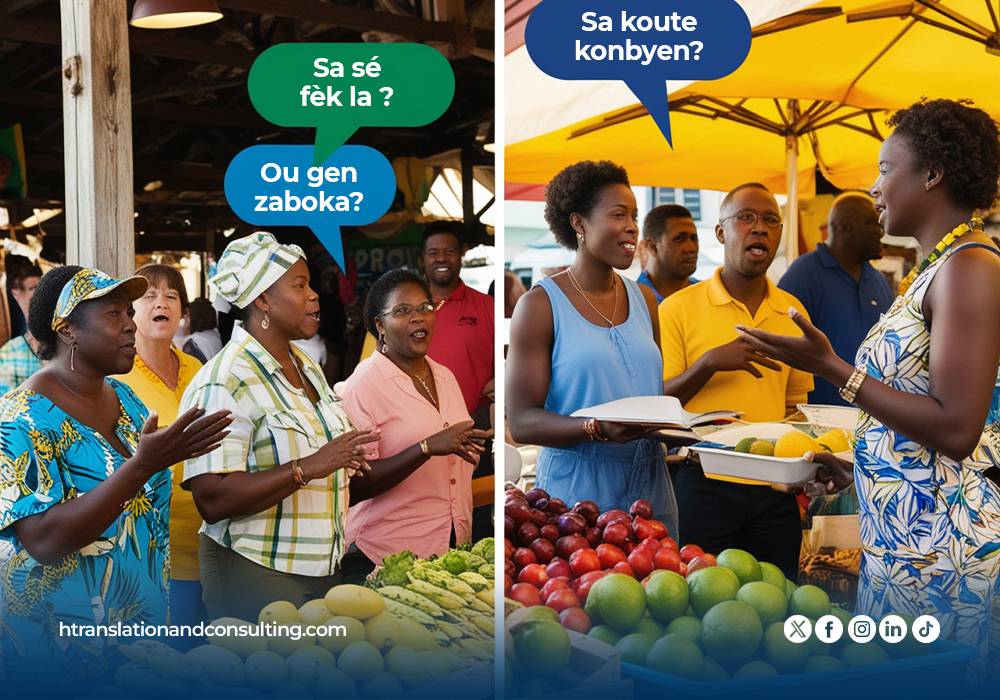
In the context of the French Antilles, Creole proves to be much more than a simple means of communication. It constitutes a vehicle for cultural identity and a domain where complex issues of gender, social status, and power intersect. The coexistence of Creole and French in this region, marked by a colonial history and socio-economic transformations, reflects the dynamics of social stratification. This analysis explores how Creole and French, as languages with different statuses, influence and embody linguistic representations and practices, highlighting how these practices vary according to the sex of the speakers.
The sociolinguistic approach to the study of Antillean Creole highlights the linguistic duality and the different social functions that Creole and French occupy. Creole, often learned within the family and in informal settings, is the language of daily life, family interactions, and local culture. Conversely, French, dominant in educational, administrative, and official institutions, represents social advancement and economic mobility. This functional division influences how speakers of both sexes position themselves in relation to each language. In a region where Creole is associated with cultural heritage and French with prestige, perceptions of these languages are often colored by identity and gender considerations.

The influence of gender on language practices is clearly evident in the study of language behavior within Creole-speaking communities. Men, for example, demonstrate a strong attachment to the use of Creole in community and informal interactions, reflecting authenticity and solidarity within local social groups. Women, on the other hand, may show a preference for French, particularly when interacting with children or in formal settings. This preference for French stems from social expectations where standard, correct language becomes a means of self-affirmation and respectability, especially for those who assume the central role of child socialization.
Studies also reveal that gender differences in the use of Creole and French reflect the specific social roles and cultural expectations of men and women. Women may be perceived as being closer to French due to their role in raising children, where French, the language of instruction, is favored to ensure academic success. Furthermore, men, in their expression of masculinity and virility, may adopt more pronounced forms of Creole, associated with frankness and strength—traditionally masculine values. This gendered distinction in language use reinforces differentiated social roles and contributes to the linguistic stratification between Creole and French.
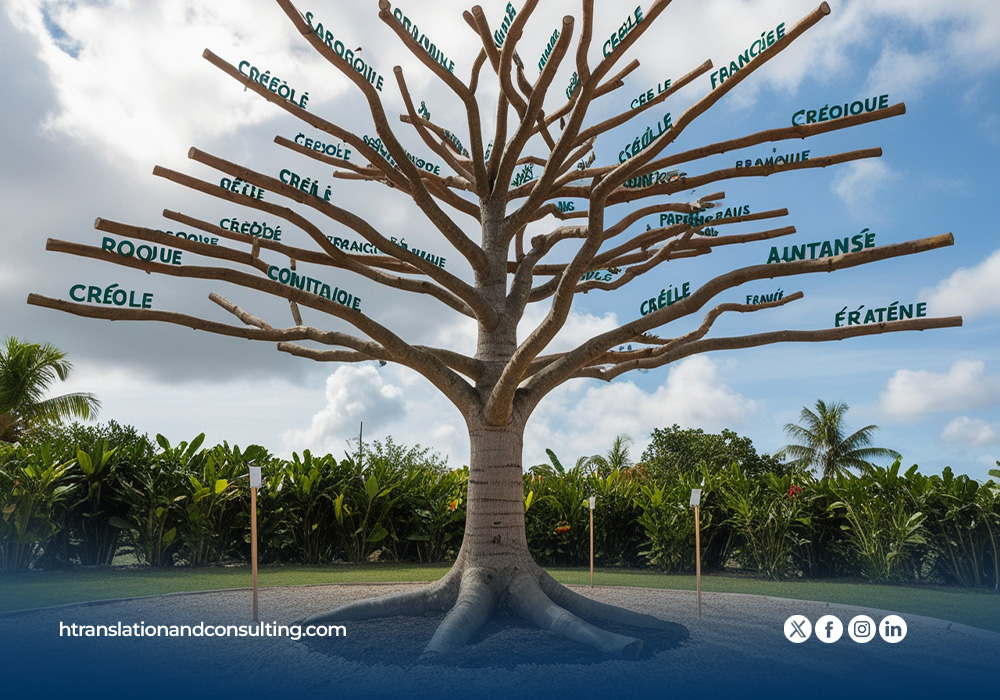
The influence of Creole and French on the perception of individual and collective identities is also evident in attitudes toward Creole literacy. The introduction of Creole in schools is viewed ambivalently. For some mothers, for example, learning Creole is seen as a reinforcement of local cultural identity, while for others, French remains the priority as the language of social mobility and economic advancement. This divide in attitudes highlights the tensions between the appreciation of the Creole linguistic heritage and the practical demands of integration into the French-language education system.
The movement to promote Creole in the French Antilles, led by intellectuals and cultural activists, underscores the importance of this language as a symbol of identity, while also revealing divisions on gender issues. Men, often in leadership positions within these movements, can impose visions of Creole that focus on its public and political use, while women, despite their central role in cultural transmission, are often marginalized in official debates. This phenomenon highlights the challenges of constructing an inclusive Antillean identity that represents all voices within society.
In conclusion, the study of Creole and French in the French Antilles, through the lens of gender, reveals the complexity of sociolinguistic dynamics. It underscores the importance of languages as vehicles of cultural identity and as tools for social positioning. In a context where Antillean identity is shaped by diverse linguistic and historical influences, language becomes a space for negotiation, affirmation, and sometimes tension. Analyzing these linguistic practices in relation to gender identities paves the way for a more nuanced understanding of identity processes in multilingual and multicultural societies.
Jocelyn Godson HÉRARD, Copywriter H-Translation