


Language is not merely a means of communication; it is a powerful tool for social structuring and an instrument of cultural and political influence. As vehicles for collective identities and worldviews, languages shape social realities and play a central role in power dynamics. This article explores the relationship between language and society, examining how certain languages have become vehicles of cultural domination, while emphasizing the importance of preserving linguistic diversity to maintain more balanced international relations.
Language, as the fundamental vehicle of human communication, occupies a central place in the formation of societies and the direction of social processes. Every human being is born and grows up within a specific linguistic community, and this language crystallizes habits, categorizes human experiences, and shapes ways of thinking. In this sense, language is not simply a tool for transmitting information, but constitutes an essential actor in social structuring, influencing the ways in which we perceive and react to the world.
Languages are the vehicles of distinct cultural identities and collective representations. They offer frameworks for interpreting reality that can vary considerably from one culture to another. For example, the way a society expresses and conceives of time can reflect a way of perceiving continuity or rupture, action or contemplation. This dimension of language is central to the development of social structures and relationships between individuals, thus creating shared behavioral patterns. The linguistic habits of a community guide the choices and interpretations of its members, shaping a unique mental universe.
Language also exerts a considerable influence on cultural perceptions and relations between societies. History shows us that certain languages, championed by dominant societies, have sought to impose themselves on the rest of the world. During the Roman Empire, Latin became a language of power, disseminating not only a linguistic system but also a worldview and social norms. Today, English plays a similar role, driven by Anglo-Saxon states and their cultural, economic, and political ideals. This linguistic legacy is often linked to historical and geopolitical dynamics that extend beyond the language itself.
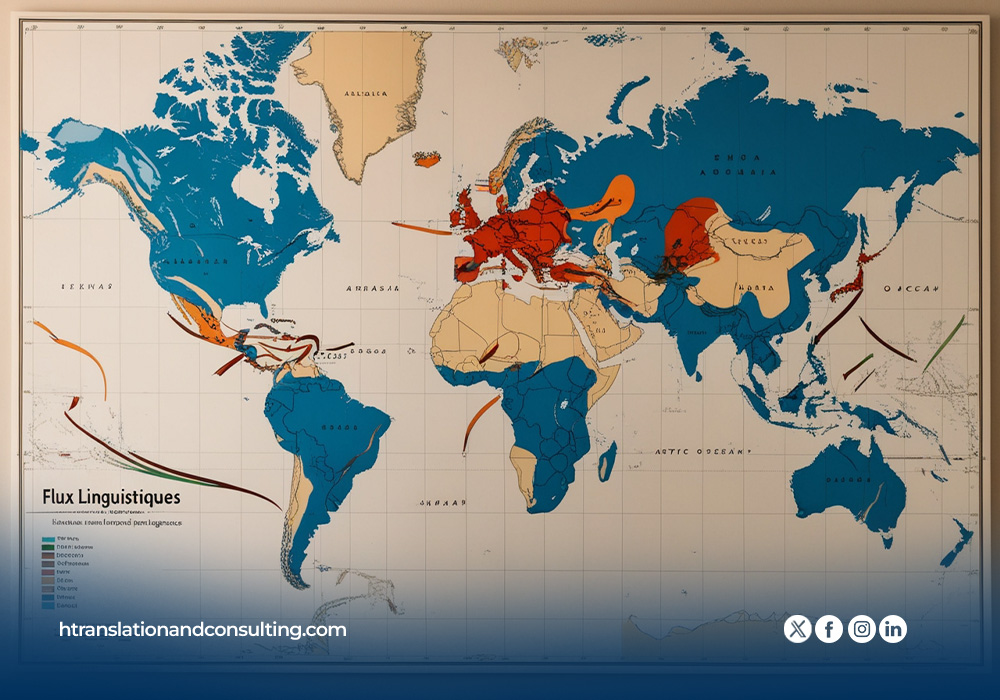
Due to its omnipresence in international relations, English has become a common means of communication within international organizations. This process is driven by a desire to simplify exchanges, but it also raises questions about linguistic diversity and the implicit power dynamics associated with the dominant use of a language. Major international languages thus vie for prominence, each supported by influential geopolitical actors.
On an individual level, multilingualism can be seen as a significant asset. Mastering several languages provides access to a plurality of cultural perspectives, allowing one to transcend the mental boundaries that a single language can impose. This linguistic competence enables one to understand the subtleties and nuances inherent in each culture and prevents the homogenization of ways of thinking.
Beyond international issues, the study of language as an instrument of power also extends to how it structures social relations within communities. Language is a vehicle for socialization, a tool through which individuals assert their existence, transmit norms and values, and build social bonds. The formal rules that govern linguistic exchanges, such as politeness or codes of verbal conduct, clearly illustrate this structuring dimension of language. They ensure the coherence and stability of social interactions, while simultaneously conveying a certain form of authority.
However, the evolution of modern societies, marked by globalization and the growing influence of digital technologies, is generating profound transformations in language and its role in power relations. The digitization of communication tends to standardize linguistic forms, favoring simplified and direct expressions at the expense of the expressive and cultural richness of languages. This dynamic is often criticized for its tendency to restrict linguistic diversity and impoverish ways of thinking.
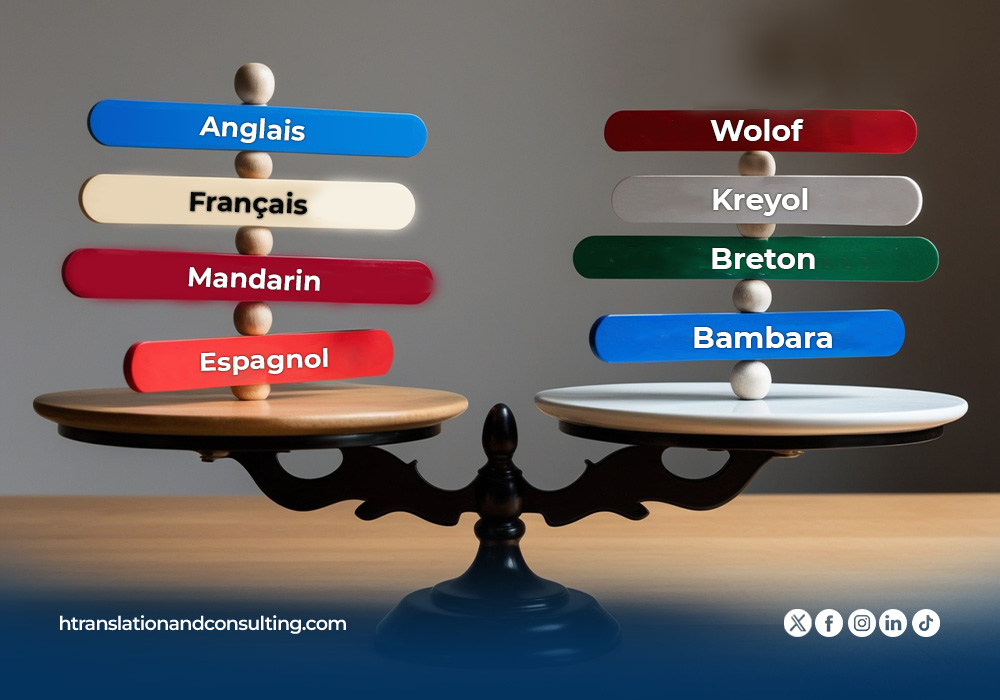
In conclusion, language emerges as a fundamental actor in social structuring and power relations. It is both a tool for cohesion and a vector of influence, capable of shaping individual and collective perceptions and behaviors. Linguistic diversity is thus a crucial issue for preserving cultural identities and promoting an open and pluralistic societal model. Understanding the influence of language on societies allows us to grasp the complexity of social dynamics and power relations, highlighting the crucial role of languages in the evolution of cultures and identities.
Jocelyn Godson Hérard, Copywriter H-Translation