


This article explores the conception of language developed by Wilhelm von Humboldt, a 19th-century philosopher and linguist, and its impact on thought and culture. Humboldt proposed that each language possesses a unique structure that shapes how its speakers perceive the world, influencing their thinking and experience. He viewed language not as a mere tool for communication, but as a dynamic and creative activity, where language and thought interact in a reciprocal process. This article presents Humboldt’s key ideas and their significance in linguistic and cultural studies.
Wilhelm von Humboldt, a 19th-century German linguist and philosopher, profoundly influenced our understanding of the relationship between language and thought. From both an anthropological and philosophical perspective, Humboldt proposed that language is not simply a tool for communication, but an essential vehicle of thought, influencing our worldview and structuring our experience of reality. Contrary to an instrumental conception, he saw language as a living, constantly evolving activity that shapes our perception of and interactions with the world.
For Humboldt, language does not merely express pre-existing thoughts; it is an active force that generates thoughts themselves. This intimate link between language and thought is what, according to him, constitutes the specificity of human experience. Language is both a creation of the mind and a form that constrains this mind, imposing limits on the ideas that individuals can express and conceptualize. Thus, each language embodies a particular “worldview,” and this linguistic diversity is essential for understanding the diversity of human cultures and societies. Humboldt develops this idea of ”Weltansicht” (worldview), which would later be taken up in the Sapir-Whorf hypothesis, according to which language conditions our perception and understanding of reality.

Humboldt’s approach to language is characterized by an organic and dynamic conception. He views language as a continuous process, an “energy” (energeia) in action, rather than a fixed “object” (ergon). This perspective contrasts with the linguistic studies of his time, which focused on static grammatical structures. For Humboldt, language is a living manifestation of the human mind, an activity constantly renewed by speakers in their daily interactions. This perspective allows us to understand language as a creative force that shapes thought and culture, and that evolves according to the needs and experiences of linguistic communities.
Humboldt also recognized the empirical and genealogical nature of languages, emphasizing the importance of their history and evolution in shaping thought. At a time when comparative linguistics focused on the common origin of languages, Humboldt distinguished himself by insisting on the uniqueness and richness of each individual language. Each language, he argued, possesses an “internal form,” a unique structure that influences how its speakers perceive and interpret the world. This linguistic diversity reflects the diversity of human cultures, and Humboldt argued that the study of languages must embrace this diversity to achieve a profound understanding of the human mind.
One of Humboldt’s major contributions is his theory of the reciprocal interaction between language and thought. Contrary to the idea that language is simply a reflection of thought, Humboldt argues that the two elements mutually nourish each other. Language shapes thought, while thought, in turn, enriches and modifies language. This dialectical relationship means that language is both determining and determined. For example, when an individual expresses themselves, they create a linguistic form that did not pre-exist in that specific form; at the same time, this expression is shaped by the grammatical structures and lexicons of their native language. This dynamic of creation and constraint is what, according to Humboldt, makes language fundamentally human.
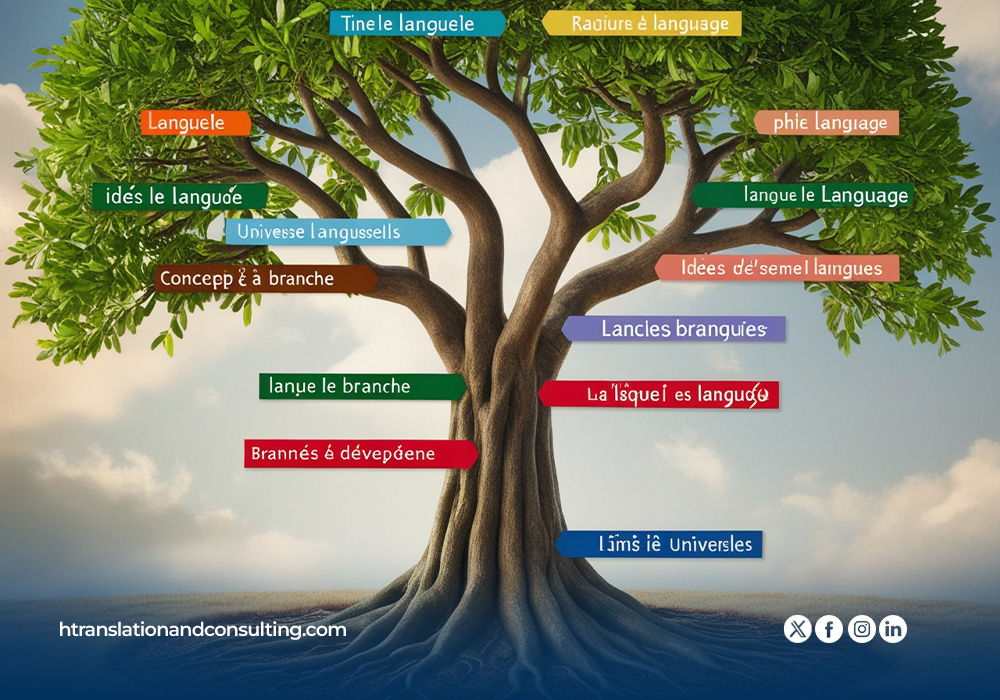
Humboldt’s approach also incorporates a transcendental dimension, inspired by Kant. He posits that language functions as a mediator between the thinking subject and the external world, making experience intelligible and shareable. Humboldt suggests that the grammatical structure of a language is more than a simple convention; it reflects a particular worldview, which conditions how speakers perceive reality. For example, differences in gender, tense, or mood in languages influence how speakers conceive of concepts such as past, future, or identity. This conditioning is so profound that it shapes not only individual expression but also the social and cultural norms of the linguistic community.
Humboldt’s interpretation of language goes beyond purely linguistic considerations. By studying linguistic structures, he seeks to achieve a broader understanding of the human mind and how individuals and groups shape their reality. This perspective is what made Humboldt a central figure in the philosophy of language, inspiring generations of linguists and thinkers. His vision of language as an organic entity, capable of shaping thought and culture, remains a major reference for those seeking to understand the interactions between language, society, and the individual.
In conclusion, Wilhelm von Humboldt offers us a complex and nuanced vision of language as an active and essential force in the formation of thought and culture. His conception of language as a dynamic process, where language and thought interact and transform each other, invites us to see linguistic diversity not as a barrier, but as a means of enriching our understanding of the world. This humanistic and anthropological approach reminds us of the importance of preserving and studying languages in all their diversity, in order to grasp the multiple worldviews they embody and the unique contributions they make to the human experience.
Jocelyn Godson HÉRARD, Copywriter H-Translation