


The links between language and culture extend far beyond words and objects. By exploring their shared functions, this article reveals how these two essential dimensions shape, transmit, and enrich our understanding of the world. This analysis illuminates their fundamental role in the construction of knowledge, social relations, and human values.

For over two centuries, the interrelationships between language and culture have sparked lively academic debate. These discussions, initiated by thinkers such as Johann Gottfried Herder and Wilhelm von Humboldt, continue to inform contemporary scholarship. The two domains, while distinct, share converging functions that underscore their proximity and interdependence. This complementarity rests on a series of common functions which, despite their specificities, converge toward a shared objective: to structure, transmit, and enrich human experience.
The cognitive function particularly well illustrates this link. Language, as the primary tool of culture, is an essential vehicle for knowledge. It allows us to name, organize, and transmit the knowledge accumulated by a society. Similarly, culture, through its works and practices, systematizes human experiences and offers an interpretation of the world. Thus, the cognitive function acts as an intersection where language and culture unite to broaden intellectual horizons and deepen our understanding of reality.
The informative function also plays a fundamental role in this relationship. While language preserves and communicates human experiences in the form of texts and statements, culture inscribes these same experiences in tangible or symbolic objects, such as works of art, rituals, or customs. These supports, whether linguistic or cultural, transcend time and space, thus ensuring continuity between generations and communities.
Furthermore, the semiotic dimension reinforces the connections between these two domains. While language functions as a system of abstract signs capable of designating and representing reality, culture enriches this capacity by endowing its creations with symbolic value. Cultural objects, whether monuments, artifacts, or practices, thus become markers of identity and witnesses to collective history.
However, the interaction between language and culture extends beyond simple mechanisms of transmission and representation. Their communicative function, for example, illustrates their role in building interpersonal and intercultural relationships. Language facilitates exchanges within human communities, just as culture, through its diverse expressions, establishes dialogues between often geographically distant groups. This capacity to create bridges between individuals and communities underscores their contribution to the humanization of social relations.
The interdependence between language and culture is also evident in their axiological function, which consists of defining and promoting value systems. Language, through its vocabulary and expressions, conveys the judgments and norms specific to a given community. Culture, for its part, by reflecting the ideals and traditions of that same community, grounds these values in concrete practices. Together, they contribute to the moral and ethical education of individuals, while also reflecting the historical evolution of societies.
Finally, the regulatory function of culture and language illustrates their role in stabilizing social structures. While culture establishes behavioral norms through its laws, customs, and institutions, language maintains linguistic coherence that facilitates understanding and cooperation within communities. These convergent functions contribute to preserving social order while also providing mechanisms for adapting to change and crises.
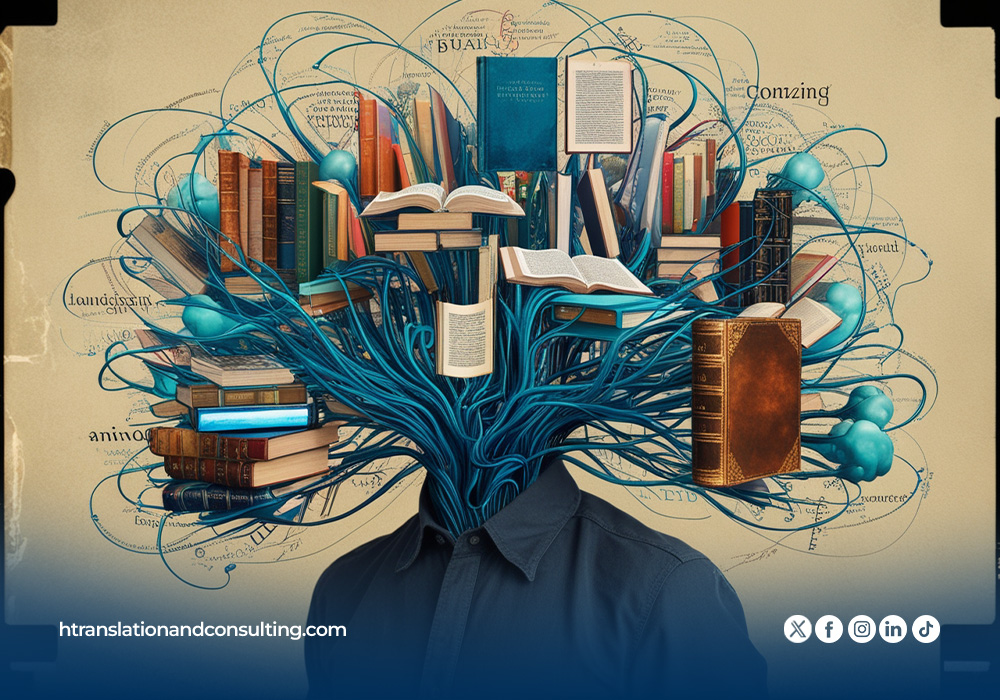
These various functions demonstrate a deeply integrated relationship between language and culture. While each retains its specific characteristics, they share a common purpose: to structure human experience and enable its transmission. This complementarity, far from being static, evolves over time, reflecting societal transformations and intercultural dynamics. It constitutes a fundamental pillar of human identity, reminding us that the richness of languages and cultures lies in their capacity to engage in dialogue, to influence one another, and to evolve together.
~Jocelyn Godson HÉRARD, Copywriter H-Translation