


This article, inspired by the work of linguist Robert Chaudenson (University of Aix-en-Provence), explores the genesis, challenges, and richness of Creole languages. Drawn from his original analysis, “The Case of Creoles,” it traces how these languages, born in the crucible of colonialism, have shaped plural identities while questioning their political and cultural status. Between linguistic heritage and contemporary issues, it delves into a world where language becomes resistance.
Creole languages, by virtue of their origin and evolution, constitute a unique object of study within the global linguistic landscape. Born in colonial contexts between the 16th and 18th centuries, these languages developed primarily in islands of the Caribbean and the Indian Ocean, as well as in certain continental regions such as French Guiana and Louisiana. Their emergence is closely linked to the historical, demographic, and social dynamics specific to colonial societies, marked by slavery, agro-industrial plantations, and cultural mixing. Although often perceived as “mixed” or “hybrid” languages, creoles are more accurately described as the result of a complex process of appropriation and transformation of popular varieties of European languages, primarily French, English, Portuguese, or Spanish, adapted by predominantly non-European populations under conditions of intense linguistic contact (Chaudenson, 2001).
The genesis of creoles can be illuminated by three metaphorical principles: unity of time, place, and action. Unity of time refers to the rapidity of the creolization process, which coincided with the rise of colonial agro-industries and the massive influx of enslaved labor, often within a span of thirty to fifty years. Unity of place highlights insularity as a determining factor, islands offering an enclosed space conducive to the emergence of autonomous linguistic systems. Finally, unity of action underscores the central role of the slave plantation, the socio-economic framework where the linguistic contributions of colonists, enslaved people, and indentured laborers were synthesized (Chaudenson, 1992). This process, described as a “witch’s recipe,” presupposes the convergence of multiple historical and socio-demographic elements: European colonization, a diverse enslaved population, and an initial settlement phase long enough to allow for the stabilization of linguistic structures.
Linguistically, creoles are distinguished by their systemic autonomy. Although their lexicon is largely derived from colonial languages, their grammars cannot be reduced to mere simplifications or mixtures. Rather, they reflect an innovative reorganization, influenced by the languages of the dominated populations and the communicative needs of multilingual communities. Thus, Haitian Creole, Martinican Creole, and Réunion Creole are not dialects of French, but languages in their own right, endowed with original morphosyntactic structures (Chaudenson, 2001). This autonomy, however, has not always been recognized, due to devaluing social representations associating creoles with “inferior” or “incomplete” languages.
The question of the political and educational status of Creole languages illustrates the tensions between identity recognition and colonial legacy. The independence of territories like Haiti (1804) and Mauritius (1968) did not automatically lead to the promotion of local Creoles. In Haiti, despite the constitutional recognition of Creole as a national language in 1983, French remains the dominant language in formal spheres, perpetuating a diglossia in which Creole is relegated to informal oral communication (Ferguson, 1959). In the Seychelles, a proactive policy in the 1980s integrated Creole as a medium of primary education, but material limitations (lack of literature, political resistance) hampered its expansion (Chaudenson & Vernet, 1983). In the French overseas departments (DOM), the creation of a competitive examination for secondary school teachers (CAPES) in Creole in 2000 reignited debates on the unity or diversity of Creole languages. Although some actors advocate the idea of a “pancreole” language, the linguistic differences between, for example, Réunion Creole and Antillean Creoles make this vision inoperative, as evidenced by the need for separate sub-competitions for each variety (Prudent, 2001).
The semantic ambiguity of the term “Creole” itself adds a layer of complexity. Historically derived from the Spanish *criollo* (referring to whites born in the colonies), the word has evolved differently depending on the context. In societies like Haiti or Réunion, “Creole” refers to indigeneity, regardless of phenotype, encompassing whites, blacks, and mixed-race people. Conversely, in the Lesser Antilles or Mauritius, the term remains associated with specific groups: white descendants of colonists (Antilles) or a mixed-race minority (Mauritius). These divergences reflect distinct social structures, where race and social factors intersect differently (Chaudenson, 1974). In Louisiana, the coexistence of two meanings—one designating French-speaking whites, the other Afro-descendants—illustrates the plasticity of the concept, dependent on local historical legacies.
On a cultural level, the notion of “creolization” extends beyond the linguistic realm to encompass phenomena of syncretism in music, cuisine, and religious practices. While a “pan-creole” culture seems conceivable through these shared expressions, the idea of a single language remains utopian, as each creole is rooted in a specific history and territory (Chaudenson, 1992). Attempts at standardization or unification, such as the Bannzil Kréyol movement of the 1980s, clash with the reality of irreducible diversity, both linguistic and sociopolitical.
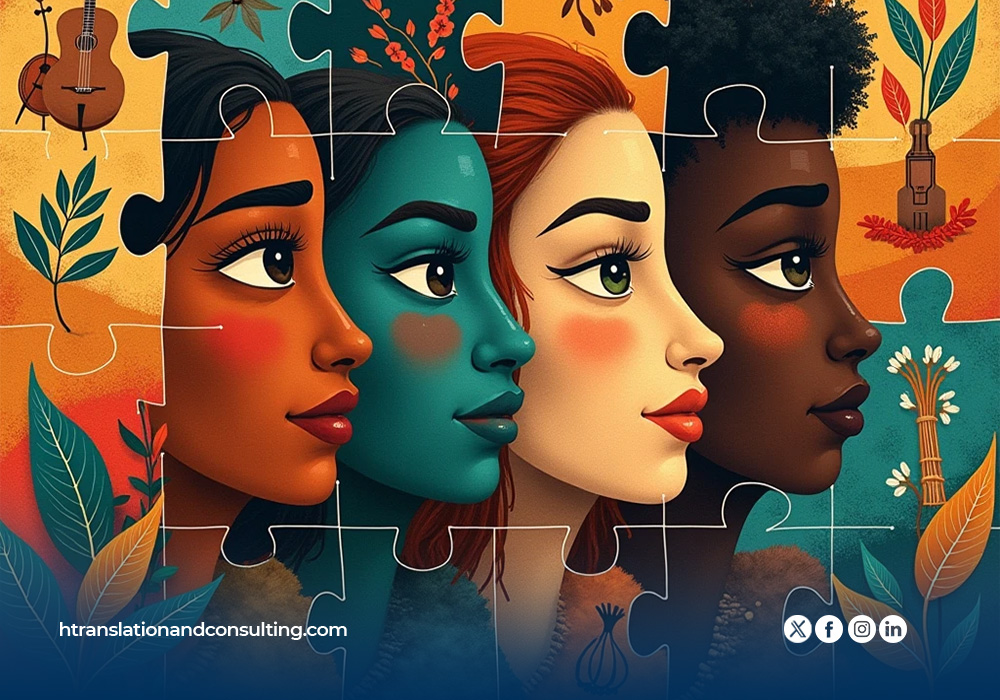
Ultimately, Creole languages embody a paradox: born of colonial domination, they have become vehicles of identity and cultural resistance. Their study reveals both the mechanisms of language formation and the power dynamics and representational issues that permeate postcolonial societies. Their future will depend on their ability to adapt to contemporary challenges—globalization, digitalization, migration—while preserving their unique character, navigating between heritage and innovation.
Jocelyn Godson HÉRARD, Copywriter H-Translation